
 Bruce Strong is The Alexia endowed chair and an associate professor of visual communications at Syracuse University’s S.I. Newhouse School of Public Communications. As a visual storyteller, he is inspired by a desire to bridge cultural divides and focus on our shared humanity, and he welcomes opportunities to work with great people on meaningful projects because life’s too short to do anything else. He has photographed in nearly 80 countries, including Greenland, Montenegro, Chile, Oman, Mauritius, Mongolia, Armenia and South Sudan.
Strong was on staff at The Orange County Register in Southern California for 11 years and has freelanced for a variety of international publications and nonprofit organizations. His work has been published in such prestigious publications as TIME Magazine and National Geographic, and he has earned numerous awards and fellowships — serving as a 2025 Emerging Technologies Faculty Fellow at Newhouse School, a Knight-Wallace Kellogg Public Policy Fellow at the University of Michigan (focusing on the intersection of journalism and the arts to foster community leadership), a Scripps Howard Academic Leadership Academy Fellow at Louisiana State University (focused on developing leadership skills for deans, chairs, and directors in journalism education), a Kauffman Professor of Entrepreneurship and Innovation at Syracuse University, and a Knight Fellow at Ohio University, where he earned a master’s degree in visual communications. He also served as an inaugural VII Foundation visiting scholar at the VII Academy in Sarajevo, Bosnia and Herzegovina, and as the first professional in residence at MediaStorm (then in New York City), after which he became chair of the Newhouse School’s Visual Communications department, a role he held for 10 years.
When he’s not in the field, Strong spends time helping others learn to tell stories that matter. At Newhouse, he teaches video, audio, photography and multimedia, and he serves as The Alexia endowed chair, presiding over its annual international grant competition and other projects. Bruce considers teaching a rewarding and enlightening journey, and he is proud of his students, many of whom have won top honors from NPPA, POY, World Press and BOP, even while still students. He also mentored back-to-back College Photographer of the Year winners Matt Eich and Travis Dove.
Strong has been honored for his teaching as well, including a Meredith Teaching Recognition Award from Syracuse University and the National Press Photographers Association’s Robin F. Garland Educator Award. Strong also has lectured and led workshops for various groups, including NPPA’s Multimedia Immersion Workshop and the Maine Media Workshops, and he has been sent by the U.S. State Department to teach visual storytelling and photography to photojournalists in Ecuador, Oman and Mauritius.
Bruce is most proud of his sons, Jack and Cole, and loves adventuring through life with Claudia, his designer/writer/curator/professor wife.
Bruce Strong is The Alexia endowed chair and an associate professor of visual communications at Syracuse University’s S.I. Newhouse School of Public Communications. As a visual storyteller, he is inspired by a desire to bridge cultural divides and focus on our shared humanity, and he welcomes opportunities to work with great people on meaningful projects because life’s too short to do anything else. He has photographed in nearly 80 countries, including Greenland, Montenegro, Chile, Oman, Mauritius, Mongolia, Armenia and South Sudan.
Strong was on staff at The Orange County Register in Southern California for 11 years and has freelanced for a variety of international publications and nonprofit organizations. His work has been published in such prestigious publications as TIME Magazine and National Geographic, and he has earned numerous awards and fellowships — serving as a 2025 Emerging Technologies Faculty Fellow at Newhouse School, a Knight-Wallace Kellogg Public Policy Fellow at the University of Michigan (focusing on the intersection of journalism and the arts to foster community leadership), a Scripps Howard Academic Leadership Academy Fellow at Louisiana State University (focused on developing leadership skills for deans, chairs, and directors in journalism education), a Kauffman Professor of Entrepreneurship and Innovation at Syracuse University, and a Knight Fellow at Ohio University, where he earned a master’s degree in visual communications. He also served as an inaugural VII Foundation visiting scholar at the VII Academy in Sarajevo, Bosnia and Herzegovina, and as the first professional in residence at MediaStorm (then in New York City), after which he became chair of the Newhouse School’s Visual Communications department, a role he held for 10 years.
When he’s not in the field, Strong spends time helping others learn to tell stories that matter. At Newhouse, he teaches video, audio, photography and multimedia, and he serves as The Alexia endowed chair, presiding over its annual international grant competition and other projects. Bruce considers teaching a rewarding and enlightening journey, and he is proud of his students, many of whom have won top honors from NPPA, POY, World Press and BOP, even while still students. He also mentored back-to-back College Photographer of the Year winners Matt Eich and Travis Dove.
Strong has been honored for his teaching as well, including a Meredith Teaching Recognition Award from Syracuse University and the National Press Photographers Association’s Robin F. Garland Educator Award. Strong also has lectured and led workshops for various groups, including NPPA’s Multimedia Immersion Workshop and the Maine Media Workshops, and he has been sent by the U.S. State Department to teach visual storytelling and photography to photojournalists in Ecuador, Oman and Mauritius.
Bruce is most proud of his sons, Jack and Cole, and loves adventuring through life with Claudia, his designer/writer/curator/professor wife.
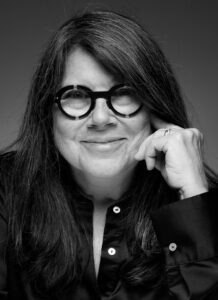 Originally from Chile and a former journalist, Claudia Strong is now in her 20th year teaching graphic design and writing to emerging designers, photographers and filmmakers at Syracuse University’s S.I. Newhouse School of Public Communications in New York. She also serves as curator of communications, design and exhibitions for The Alexia, a center at the Newhouse School that supports documentary visual storytellers around the world through grants, scholarships, fellowships and other programs.
In what has turned out to be a delightfully circuitous and varied communications career, Strong began as a newspaper editor after earning a Bachelor of Science degree from Northwestern University’s Medill School of Journalism, then moved to the visuals side of the newsroom to help launch the paper’s digital design era before eventually entering the freelance world and, later, academia.
While on sabbatical from Newhouse in 2023, she served as an inaugural visiting scholar with the VII Foundation at its photographic academy in Sarajevo, Bosnia and Herzegovina, where she unexpectedly unlocked a new level in her career: curation and exhibition design. Since then, she has produced numerous national and international exhibitions to present and promote meaningful photographic storytelling, including at the EU Parliament in Strasbourg, France, as well as in festivals and galleries in China, Croatia, Serbia, Lithuania and the United States. The exhibits have featured topics such as migrants and fashion, the people and forgotten places along a dying Balkan river, life in a post-Soviet republic, a photographer coming to grips with her Muslim/Catholic heritage, and numerous other significant documentary projects. She is currently working on an ambitious but still-under-wraps multi-site exhibition about autism with stories and images captured by a renowned and prolific American documentary photographer.
Fluent in Spanish and adventure, she embraces all sorts of exciting exploits around the world with her husband and their trusty just-say-yes attitude.
Originally from Chile and a former journalist, Claudia Strong is now in her 20th year teaching graphic design and writing to emerging designers, photographers and filmmakers at Syracuse University’s S.I. Newhouse School of Public Communications in New York. She also serves as curator of communications, design and exhibitions for The Alexia, a center at the Newhouse School that supports documentary visual storytellers around the world through grants, scholarships, fellowships and other programs.
In what has turned out to be a delightfully circuitous and varied communications career, Strong began as a newspaper editor after earning a Bachelor of Science degree from Northwestern University’s Medill School of Journalism, then moved to the visuals side of the newsroom to help launch the paper’s digital design era before eventually entering the freelance world and, later, academia.
While on sabbatical from Newhouse in 2023, she served as an inaugural visiting scholar with the VII Foundation at its photographic academy in Sarajevo, Bosnia and Herzegovina, where she unexpectedly unlocked a new level in her career: curation and exhibition design. Since then, she has produced numerous national and international exhibitions to present and promote meaningful photographic storytelling, including at the EU Parliament in Strasbourg, France, as well as in festivals and galleries in China, Croatia, Serbia, Lithuania and the United States. The exhibits have featured topics such as migrants and fashion, the people and forgotten places along a dying Balkan river, life in a post-Soviet republic, a photographer coming to grips with her Muslim/Catholic heritage, and numerous other significant documentary projects. She is currently working on an ambitious but still-under-wraps multi-site exhibition about autism with stories and images captured by a renowned and prolific American documentary photographer.
Fluent in Spanish and adventure, she embraces all sorts of exciting exploits around the world with her husband and their trusty just-say-yes attitude.
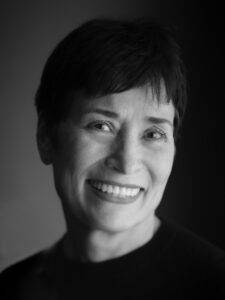
Two-time Pulitzer Prize-winning photographer and picture editor Paula Nelson is a 30-year-career visual journalist, serving as photographer, picture editor, manager, leader and educator.
Nelson began her career as a staff photographer at The Dallas Morning News, where she covered a variety of assignments, from breaking news to sports to features and award-winning studio work. She also traveled to India, Thailand, Mexico, Russia, Latvia, Estonia, Cuba, around the country and around the state of Texas documenting long-term projects. Nelson and a small team of colleagues were awarded the 1994 Pulitzer Prize for Violence Against Women: A Question of Human Rights. After 13 years, she became a picture editor, shepherding an award-winning photography staff and earning her recognition as one of the top picture editors in the country.
After leaving Dallas, Nelson became the Page One picture editor at The Boston Globe in 2002, editing tens of thousands of images to illustrate daily special sections during the Iraq and Afghanistan Wars. She also worked to define the visual philosophy of both print and online publications, and to improve the quality of visuals produced by the staff. Nelson quickly became director of photography, managing an award-winning staff of 31 still and video visual producers and eventually became The Globe’s first and only assistant managing editor for photography, the highest rank in the newsroom for a visual professional. In 2014, The Globe was awarded the Pulitzer Prize for its multimedia coverage of the marathon bombing, which included visuals produced under Nelson’s leadership.
Following a sabbatical, Nelson became a fellow at the S.I. Newhouse School of Visual Communications at Syracuse University and earned a Master of Science in Multimedia, Photography and Design in May of 2021. Her three-part master’s project includes a book she edited and designed, Analog: Collected Family Photographs; a 17-minute audio story, A Box of Photographs, the stories behind family photographs that can be heard on PRX; and a website: https://www.paulafnelson.com/.
With her extensive professional experience in storytelling and visuals and travel to 51 countries, as a professor of practice in the Visual Communications department at Newhouse, Nelson teaches visual storytelling, journalism, photography skills, and picture editing and sequencing for multiple outcomes.
Two-time Pulitzer Prize-winning photographer and picture editor Paula Nelson is a 30-year-career visual journalist, serving as photographer, picture editor, manager, leader and educator.
Nelson began her career as a staff photographer at The Dallas Morning News, where she covered a variety of assignments, from breaking news to sports to features and award-winning studio work. She also traveled to India, Thailand, Mexico, Russia, Latvia, Estonia, Cuba, around the country and around the state of Texas documenting long-term projects. Nelson and a small team of colleagues were awarded the 1994 Pulitzer Prize for Violence Against Women: A Question of Human Rights. After 13 years, she became a picture editor, shepherding an award-winning photography staff and earning her recognition as one of the top picture editors in the country.
After leaving Dallas, Nelson became the Page One picture editor at The Boston Globe in 2002, editing tens of thousands of images to illustrate daily special sections during the Iraq and Afghanistan Wars. She also worked to define the visual philosophy of both print and online publications, and to improve the quality of visuals produced by the staff. Nelson quickly became director of photography, managing an award-winning staff of 31 still and video visual producers and eventually became The Globe’s first and only assistant managing editor for photography, the highest rank in the newsroom for a visual professional. In 2014, The Globe was awarded the Pulitzer Prize for its multimedia coverage of the marathon bombing, which included visuals produced under Nelson’s leadership.
Following a sabbatical, Nelson became a fellow at the S.I. Newhouse School of Visual Communications at Syracuse University and earned a Master of Science in Multimedia, Photography and Design in May of 2021. Her three-part master’s project includes a book she edited and designed, Analog: Collected Family Photographs; a 17-minute audio story, A Box of Photographs, the stories behind family photographs that can be heard on PRX; and a website: https://www.paulafnelson.com/.
With her extensive professional experience in storytelling and visuals and travel to 51 countries, as a professor of practice in the Visual Communications department at Newhouse, Nelson teaches visual storytelling, journalism, photography skills, and picture editing and sequencing for multiple outcomes.