
THE KYOTO PROJECT
Spend a month in Kyoto exploring the city as a storyteller — meeting people, asking questions and following your curiosity. With Japanese student interpreters by your side, you’ll explore the city and discover a Kyoto most visitors never get to know.
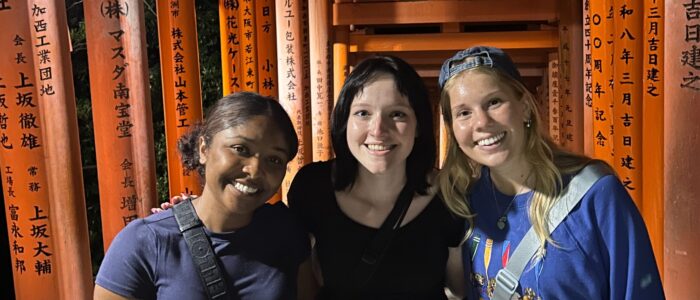
Exploring together: Students take an evening hike at the iconic Fushimi Inari shrine.
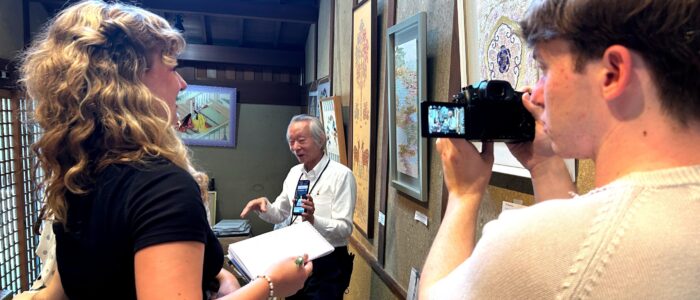
Out in the field: Students interview a source about efforts to preserve traditional crafts.
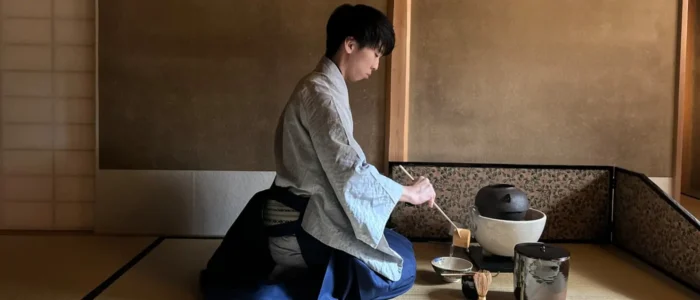
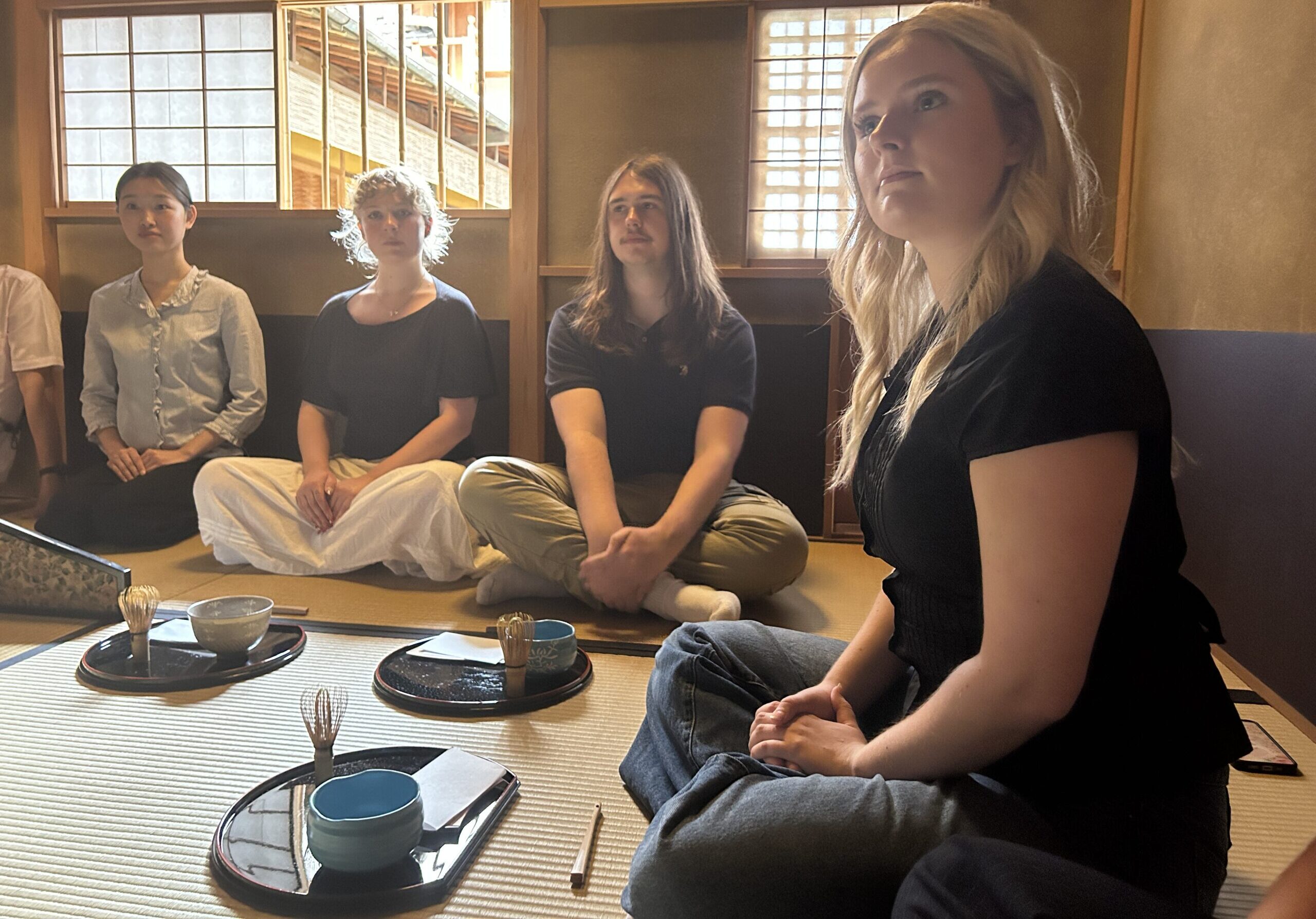
Preserving tradition: A tea master demonstrates the art of the traditional tea ceremony.

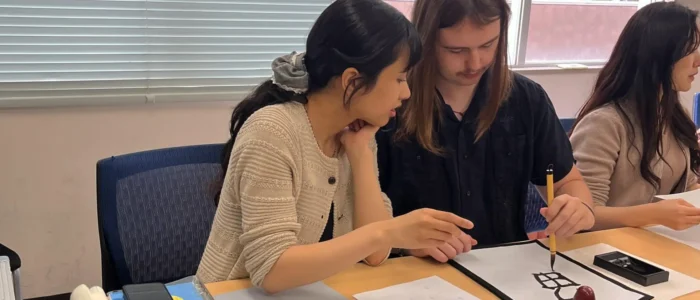
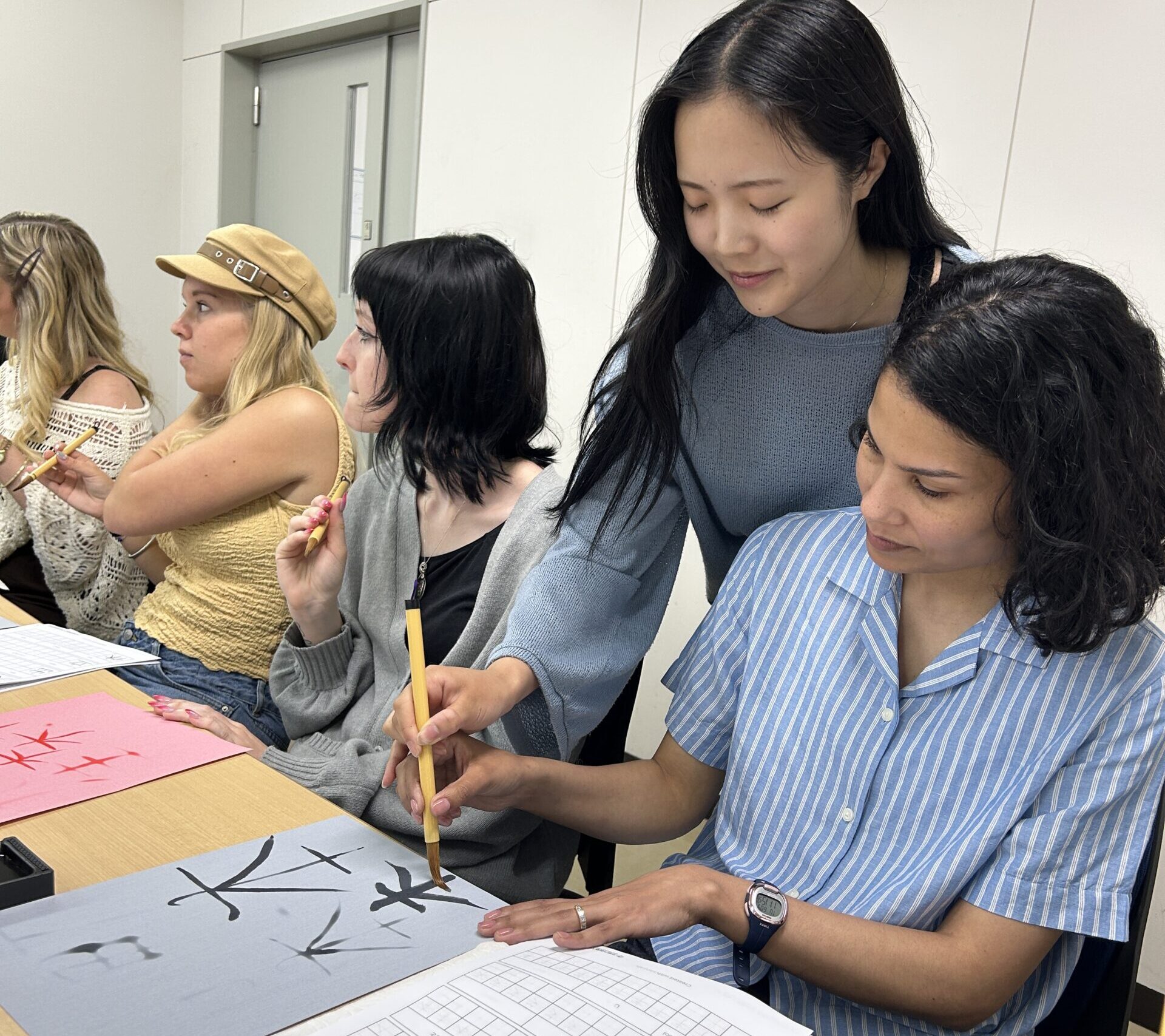
Mastering the brush: A Japanese student guides an American in the art of calligraphy.
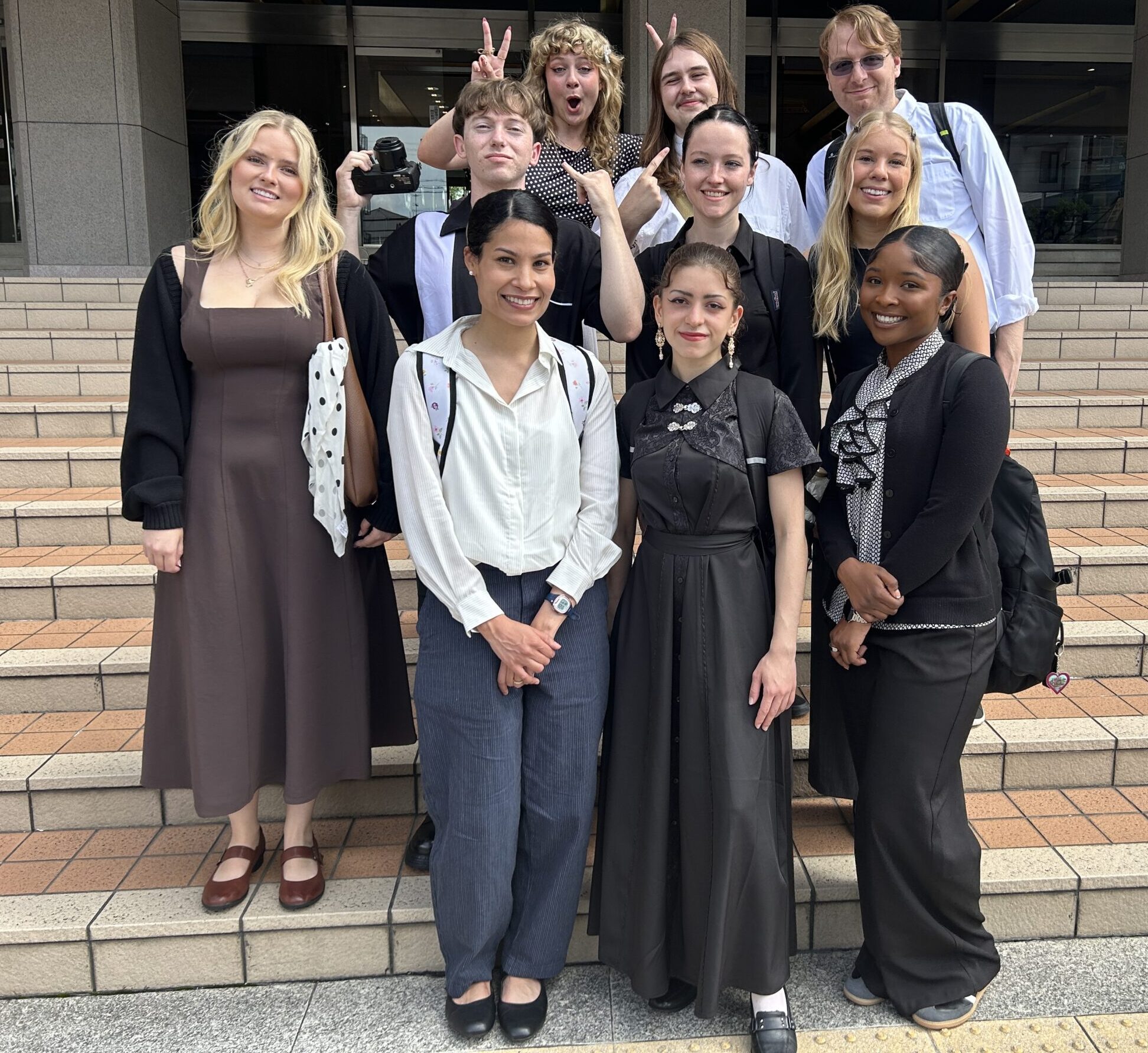
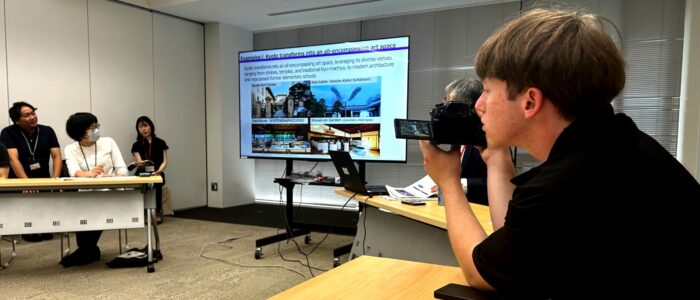
Real-world experience: Students cover a press briefing at Kyoto City Hall.
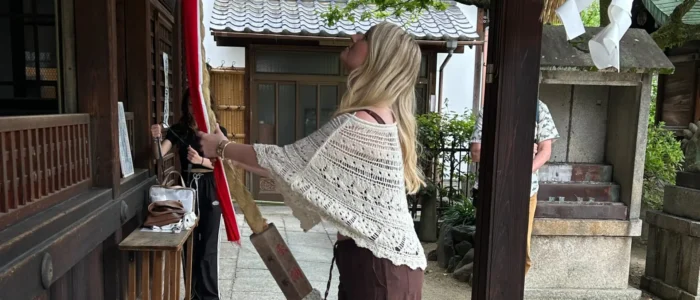
Kyoto traditions: A student rings a bell during a visit to a shrine.
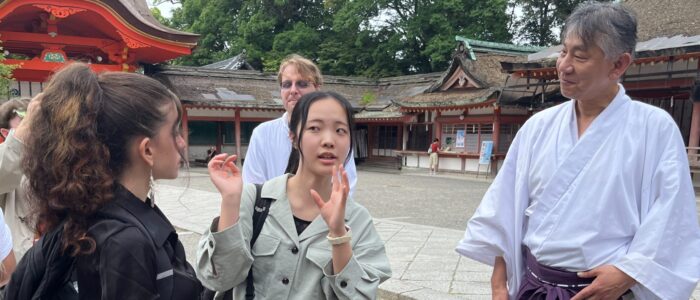
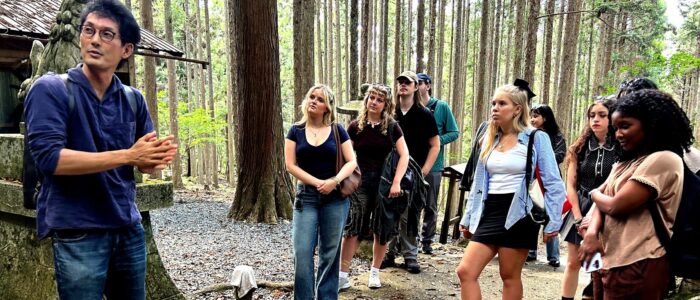
Exploring rural Kyoto: A local guide takes students to a shrine outside the city.
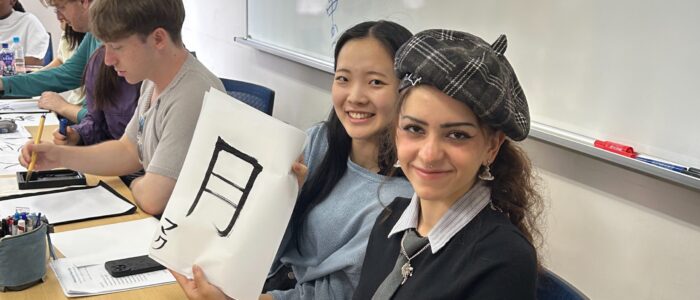
Learning across cultures: Japanese and American students connect at a calligraphy lesson.
Bridging the gap: A Japanese interpreter helps American students interview a Shinto priest.
Taking the mic: Students unwind with an evening of karaoke.
FAST FACTS
DATES: May 25-June 25, 2027
LOCATION: Kyoto, Japan
ENROLLMENT CAPACITY: 14
FOCUS: International reporting, including cross-cultural interviewing with interpreters, narrative writing, photography and multimedia storytelling
PARTNER UNIVERSITY: Kyoto University of Foreign Studies
PROJECT COST: $6,395 + airfare
INCLUDES: Shared room accommodations in a hotel; welcome and farewell dinners; transit passes; cultural events; instruction and mentoring; and travel insurance. Cost does not include airfare.
ACADEMIC CREDIT: Optional 3 semester or 4 quarter upper-division units through the University of Jamestown ($450 additional; transfer subject to home university approval)
PUBLICATION: The Kyoto Project
INFO SESSIONS
Join our next Zoom info session on Friday, Sept. 11 at 11 a.m. PT / 2 p.m. ET to meet the faculty and former Kyoto Project students, learn more about the program and get your questions answered.
THE PROGRAM
Spend a month in Japan learning how to find and tell stories across cultures.
Working alongside Japanese student interpreters from Kyoto University of Foreign Studies, you’ll venture into Kyoto’s neighborhoods, meet local residents and community leaders, and report on the people, places and issues shaping life in Japan today.
You won’t just study international journalism — you’ll practice it. You’ll learn how to research and develop compelling stories, conduct interviews across a language barrier, and use writing, photography and multimedia to bring those stories to life. You’ll publish your stories in The Kyoto Project, our online magazine, giving you published work to add to your portfolio.
Along the way, you’ll be mentored by experienced journalists and professors who will help you develop your ideas and strengthen your storytelling. Whatever your major, you’ll come away with new skills, published work and the confidence that comes from reporting in another culture.
THE CITY
Ancient temples and neon-lit streets. Traditional tea houses and karaoke bars. Quiet gardens and bustling markets. Kyoto is a city where centuries of Japanese tradition exist alongside contemporary culture — and where there’s always another story around the corner.
Japan’s imperial capital for more than 1,000 years, Kyoto is home to more than 2,000 temples and shrines, including some of the country’s most iconic landmarks. In the historic Gion district, geiko and maiko still practice traditional arts, while artisans preserve crafts passed down through generations.
But Kyoto isn’t stuck in the past. You’ll also discover a youthful, creative city filled with university students, cafés and restaurants, manga and pop culture. Visit the Kyoto International Manga Museum, explore the world of Nintendo, sample specialties at Nishiki Market or spend an evening singing karaoke with new friends.
CONNECT WITH JAPANESE STUDENTS
One of the most distinctive parts of the Kyoto Project is our partnership with Kyoto University of Foreign Studies (KUFS), where you’ll have the chance to study, socialize and work alongside Japanese students.
KUFS students training to become interpreters will join you in the field, helping you conduct interviews and navigate the language and cultural differences that are part of reporting in another country. But they’ll be more than interpreters: they’ll also be cultural ambassadors who can help you understand everyday life in Japan and make connections with the people you meet.
You’ll spend time on the KUFS campus for classes and activities, including instruction in Japanese language and culture, and have opportunities to meet other Japanese students. Welcome and farewell gatherings will bring everyone together, giving you a chance to form friendships as well as professional connections.
The result is a study-abroad experience that lets you engage with Japan from the inside rather than simply experience it as a visitor.
CULTURAL ACTIVITIES
The program takes students beyond the classroom to experience Kyoto’s culture firsthand. Through group outings, workshops and special access to local people and places, students gain a deeper understanding of Japanese life, culture and contemporary issues. Past experiences have included:
- Meeting with a Shinto priest at the historic Iwashimizu Hachimangu Shrine
- Interviewing a professional manga artist about the art and culture of manga
- Taking part in a traditional Japanese tea ceremony
- Traveling to a rural mountain community to meet residents working to combat depopulation and revitalize their town
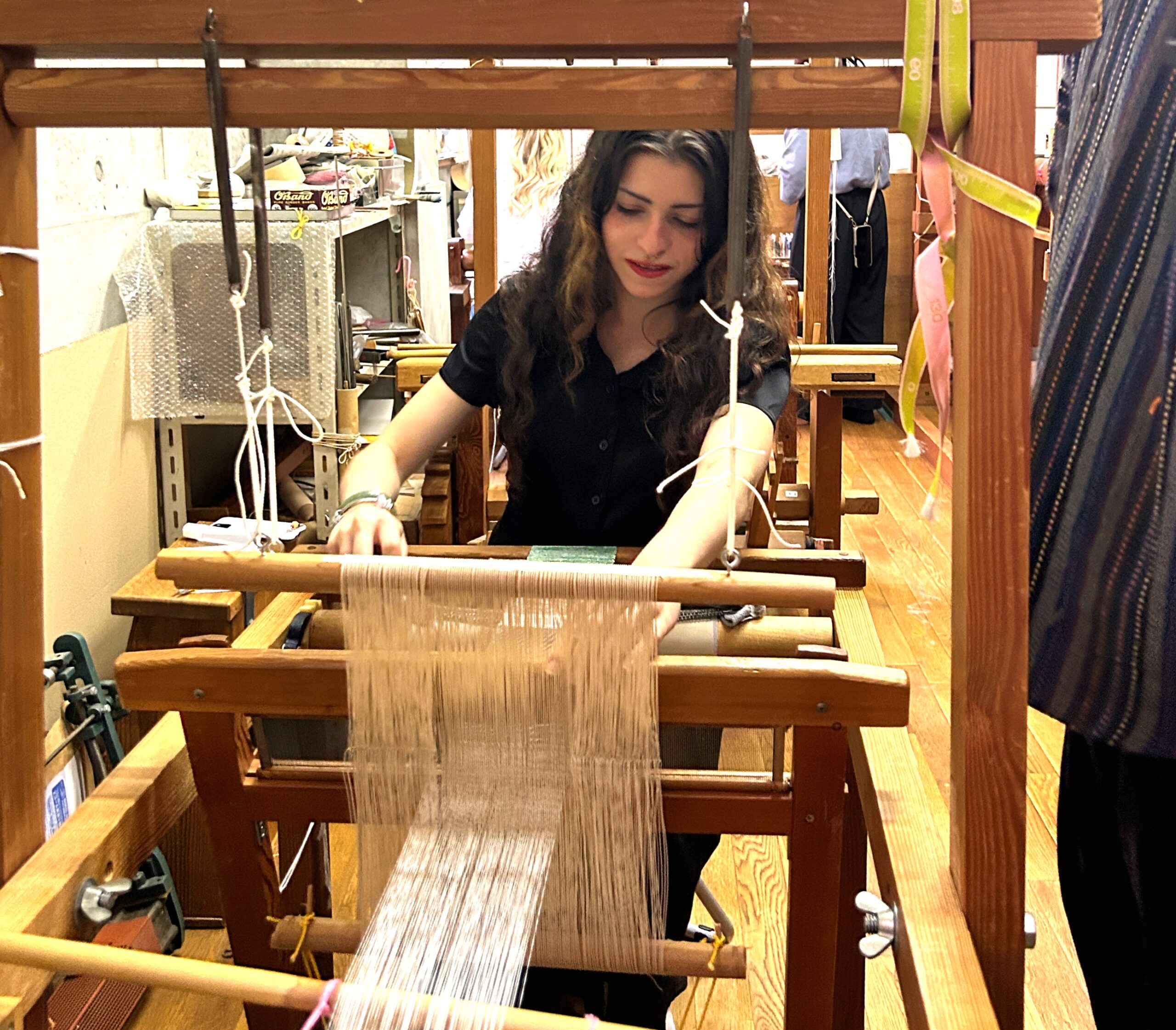
- Stepping inside a traditional weaving workshop to learn about one of Kyoto’s centuries-old crafts.
HOUSING

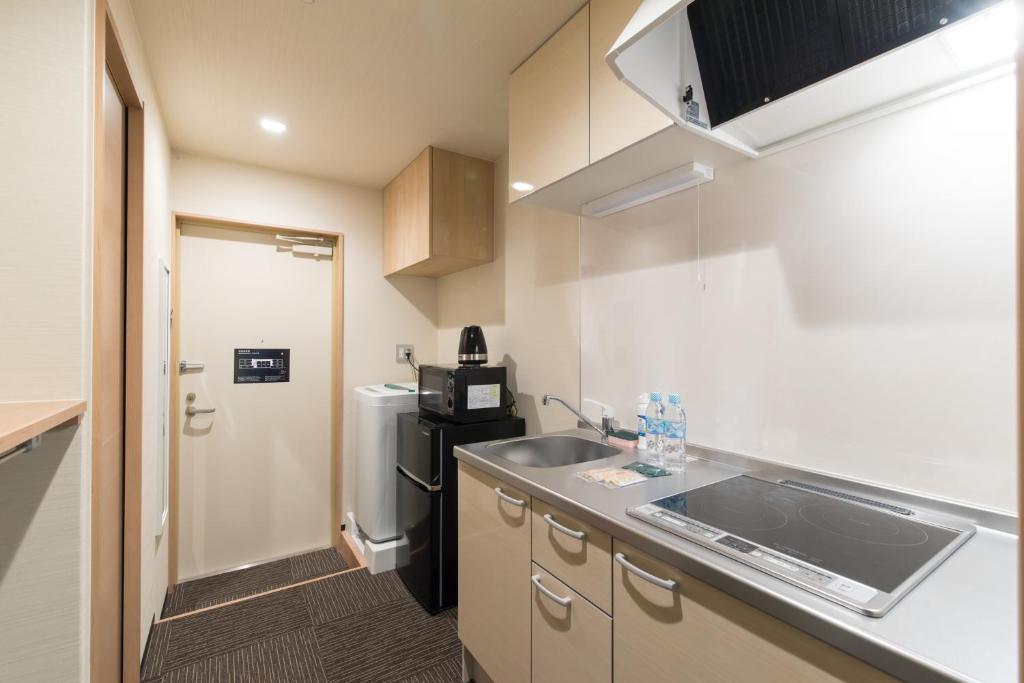
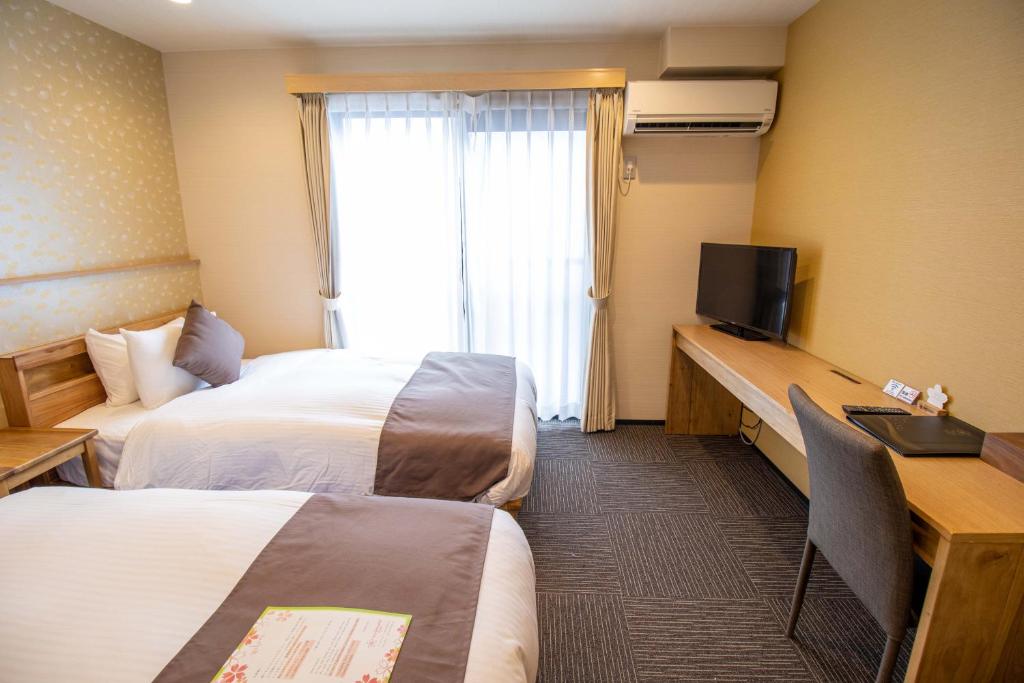
Students will stay in a modern hotel in Kyoto that’s close to public transit, shopping and our classroom building.
Rooms are shared doubles and include:
- Air conditioning
- Kitchenette with a small refrigerator, hotplate and microwave
- Eating and cooking utensils
- Laundry facilities
- Private bathroom
Prefer your own space? Single rooms are available for an additional fee.
OPTIONAL ACADEMIC CREDIT
Students on a semester system have the option to earn three academic credits of an upper-division elective for this course, issued by the University of Jamestown. Students on a quarter system will have the option to earn four academic credits.
Transfer credit acceptance, however, ultimately depends on your home university. Please check with your university for procedures to follow when transferring credits to your institution. The cost for academic credit is $450.
PUBLISHING YOUR WORK
During your month in Kyoto, you won’t just learn about international reporting — you’ll do it. Some stories will begin on group reporting trips, where you’ll meet people and explore communities, institutions and issues together. Others will grow out of your own curiosity as you pursue individual stories and conduct one-on-one interviews, often with the help of Japanese student interpreters.
Your stories and photos will be published in The Kyoto Project, ieiMedia’s online magazine, giving you portfolio pieces you can share with potential employers, graduate programs and other publications.
In 2026, students reported on a range of topics from overtourism and traditional crafts to rural depopulation, discrimination and religion. You’ll have the freedom to follow your own interests; our team will help you develop story ideas, identify sources and arrange interviews.
And the work remains yours. You retain the copyright to the stories and photos you produce and are welcome to pitch or sell them to other publications. A number of ieiMedia students have successfully placed their work with professional media outlets.
EQUIPMENT
Students should bring a laptop and smartphone for reporting and classwork. If you have a digital camera, audio recorder or other equipment you like to use, you’re welcome to bring it, but professional gear is not required. Students without a camera can use their smartphone for photography and multimedia assignments.
TRAVEL OPPORTUNITIES
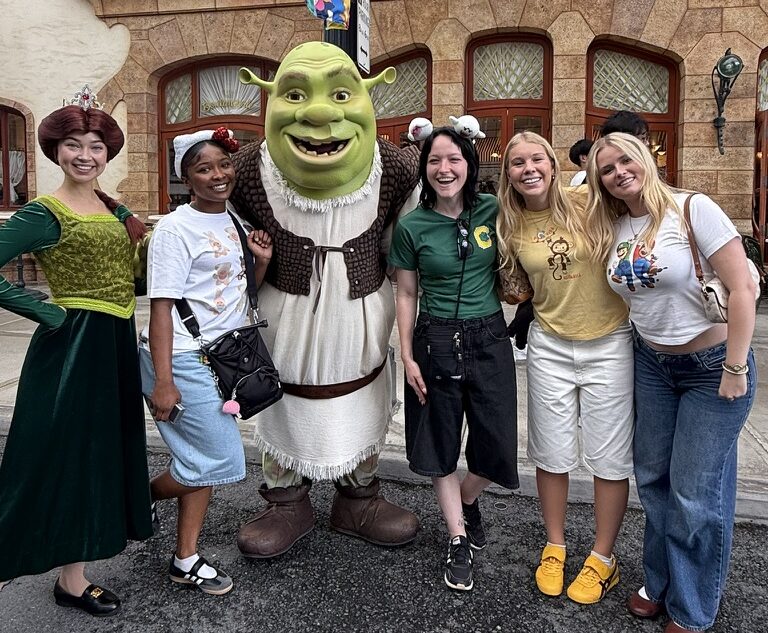
Students will have most weekends free to explore Kyoto or venture farther afield. Sample Osaka’s famous food scene; take the bullet train to Tokyo; visit Hiroshima and its poignant Peace Memorial Museum; or check out Universal Studios Japan.
Japan’s fast, convenient train system makes it easy to explore beyond Kyoto on your days off.
STUDENTS
The Kyoto Project welcomes English-speaking college students and recent graduates from around the world, including students at four-year universities and community colleges. Students from all majors are welcome, and past programs have brought together students studying journalism, English, creative writing, communications, philosophy, international relations and other fields.
Graduate students are also welcome and we can work with you to create a project that will align with your studies.
ieiMedia students have come from schools across the U.S., including Cornell University, Northwestern University, San Francisco State University, Syracuse University, UCLA, UC San Diego, University of Maryland, University of Southern California, University of Hawai‘i and Virginia Commonwealth University.
Our programs have also attracted students from Canada, Japan, the UK, Puerto Rico and Trinidad, creating a diverse group of students who learn from one another as well as from their experiences abroad.
KYOTO 2027 FACULTY
FACULTY DIRECTOR
Rachele Kanigel is a journalist and educator who taught journalism at San Francisco State University for more than 20 years, including three as department chair. Before moving into journalism education, she was a daily newspaper reporter and worked as a freelance correspondent for TIME Magazine. Her writing has appeared in U.S. News & World Report, Health, Reader’s Digest, San Francisco Magazine and other publications.
She is the author of The Student Newspaper Survival Guide and The Diversity Style Guide. A Fulbright Specialist, she spent 10 weeks in Bhutan in 2019 teaching students and training faculty at Royal Thimphu College.
She has directed ieiMedia programs in Urbino, Perpignan, Arles, Jerusalem and Kyoto and enjoys helping students discover new places and cultures through journalism.
FACULTY
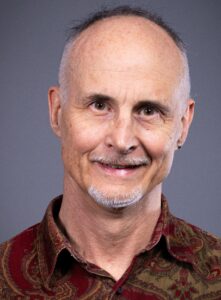
Laird Harrison, MFA, (he/him) (Reporting/Writing Professor) is an award-winning journalist, author and educator whose work has appeared in TIME, Audubon, Reader’s Digest, People, Health, the San Francisco Chronicle, Chicago Tribune, Reuters, Salon, MSNBC and CNN.com. He has also produced video for Smithsonian Magazine and WebMD and audio for KQED and WUNC public media.
Laird has taught journalism and creative writing at San Francisco State University and UC Berkeley Extension. His award-winning novel, Fallen Lake, was published by Verdant Books in 2012.
A former study abroad student in Bordeaux, Laird knows firsthand the value of living and learning in another culture. He first taught with ieiMedia in Perpignan, France, 2011 and later joined the faculty of the Arles Project. He taught in the inaugural Kyoto Project in 2026 and returns to Kyoto in 2027, when he’ll help students develop their reporting, interviewing and storytelling skills while exploring Japan.

Additional faculty for this project will be announced soon. Check back for updates and learn more with ieiMedia to stay informed about this program and other opportunities.