Jerusalem, Israel
The Jerusalem Project is closed for 2024. Please join us in Urbino where Prof. Ilene Prusher will be teaching or one of our other programs for 2024.

Jerusalem Fact Sheet
Apply now to reserve your place in Jerusalem, Israel.
GENERAL LOCATION: Jerusalem, Israel
ENROLLMENT CAPACITY: CLOSED
FOCUS: Multimedia international reporting.
COOPERATING UNIVERSITIES: University of Jamestown
PROGRAM COST:
TUITION: $5,745
CREDIT: $450
TOTAL COST: $6,195 + airfare
INCLUDES: Tuition – 3 credits, housing, instruction, health insurance, farewell dinner and special programs, activities and cultural events). DOES NOT INCLUDE AIRFARE.
APPLICATION DEADLINE: Priority Application Deadline is December 15, 2023. If you do not have the necessary access to submit your application by the priority deadline, start a conversation with us by clicking the Get Started button below. Please refer to the Application Deadline Details below for more information.
PAYMENT DEADLINES:
see Payment, Cancelation and Refund Policy for information on deposit deadlines and amounts.
ENROLLMENT CAPACITY AND WAITLISTS:
ieiMedia projects have a defined capacity limitation for applicants. Since there is a limited number of applicants who can attend, you can only be guaranteed a spot when you (1) have paid your Application Fee and (2) made payments on time according to the Costs and Payment Schedule. Read more about our late payments policy here.
Want to learn more about program faculty and past participants, with information on their stories, photos, and videos? Click here.
FINANCIAL AID: Students studying abroad for the summer term have limited financial aid options, but Pell grant recipients are encouraged to apply and receive our help in applying for a Gilman Study Abroad Scholarship which can award up to $5,000. Check with your school’s financial aid office and your study abroad offices to find out if other assistance is available. For more information on financial aid, get started by connecting with us here.
The Jerusalem Project
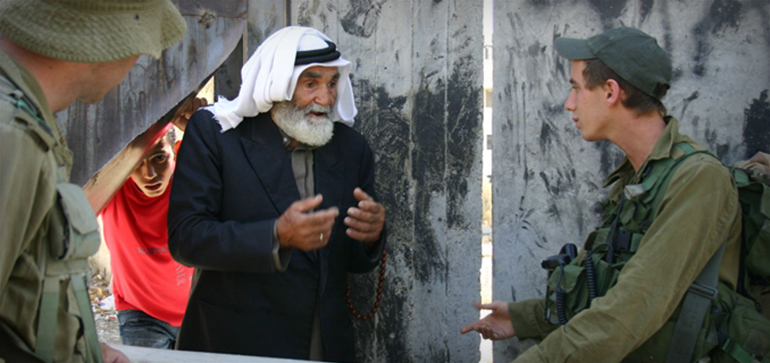
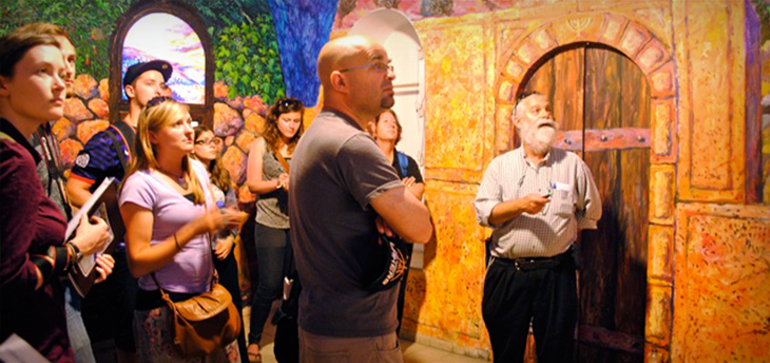
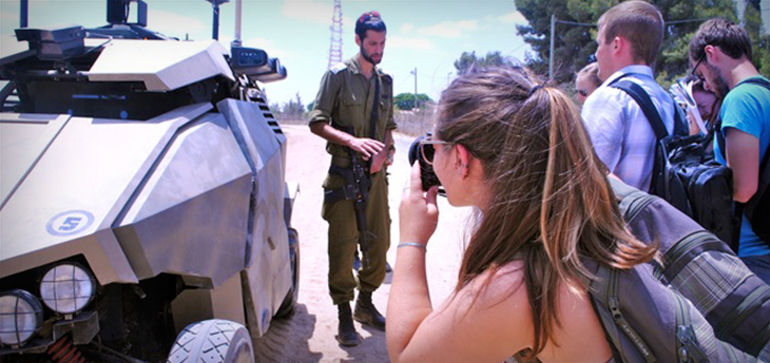
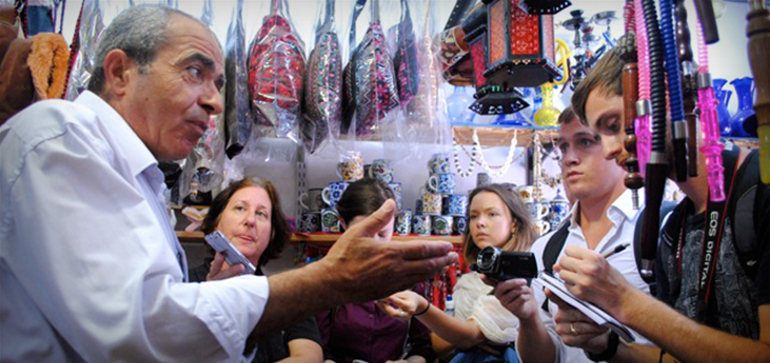
Jerusalem is one of the oldest cities in the world, settled more than 5,000 years ago, according to Ancient History Encyclopedia. The city is holy to three of the world’s major religions: Judaism, Christianity and Islam. Jerusalem is a crossroads between East and West, and it’s a place where people from various cultural and ethnic backgrounds interact, intersect and sometimes collide. As a focal point of the Israeli-Palestinian conflict, Jerusalem is also a major center for reporting on the Middle East, and many international news organizations maintain bureaus here. Students will learn international reporting techniques from veteran journalists and then work as foreign correspondents themselves, publishing their work on a multimedia website.
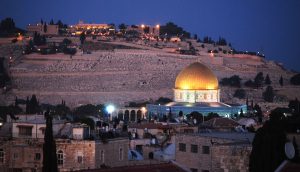
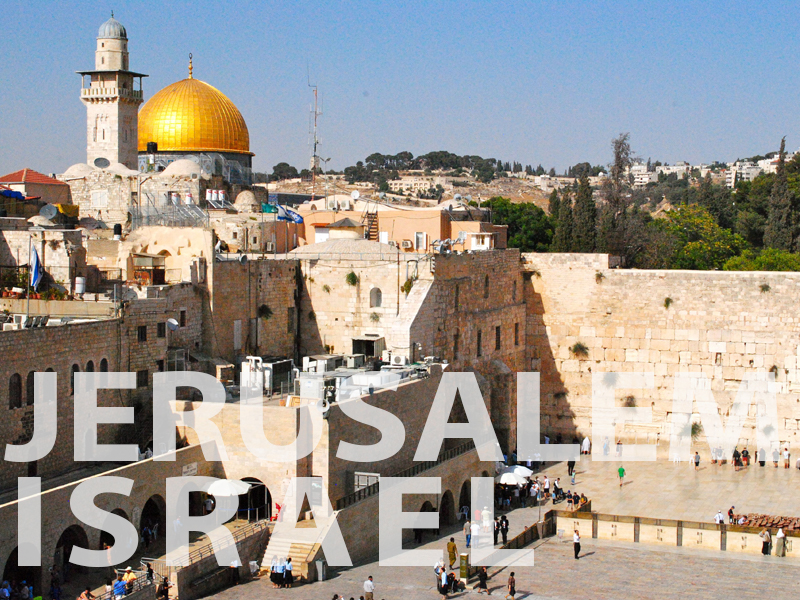
Jerusalem is a holy place for three world religions.
Student Testimonial
“[Here] you are an independent reporter working in a place filled with interesting people and amazing stories... this is something that not everyone can, or will do. This has definitely set me apart from my peers. I learned an incredible amount from our teachers who have worked as foreign correspondents for years for major publications.” – Cynthia Beasley, WSET-TV, Lynchburg, VA, 2017 ieiMedia-Jerusalem participant.
Academic Credit
Students will sign up for the following course with three optional transferable credits available through the University of Jamestown :
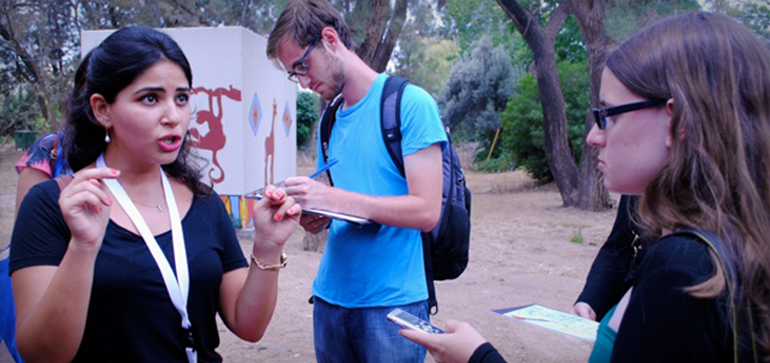
- International Reporting – Students will learn how to develop sources, conduct interviews and work with an interpreter, then report on the city around them, publishing their work on a professional-quality website. Teaching the course will be a team of veteran journalists who have covered the Middle East for years. Our faculty includes Ilene Prusher, a former foreign correspondent with extensive experience covering the Israeli-Palestinian conflict as well as Iraq and Afghanistan; Linda Gradstein, a longtime National Public Radio correspondent in Jerusalem; and Ricki Rosen, a news and feature photographer whose photos have appeared in Time magazine and The New York Times in her more than 25 years in the region.
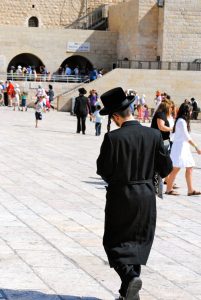
People from around the world come to visit the Western Wall.
The City
Jerusalem is one of the most fascinating cities in the world, mixing ancient and modern, holy and secular. Walk the stone streets of the Old City or the lively thoroughfares of modern Jerusalem and you’ll witness the diversity of the human experience. The capital of Israel, Jerusalem enjoys not just an abundant collection of historical and holy sites but also museums, theaters, restaurants, cafes and lively arts venues – as well as Israel’s parliament, the Knesset. East Jerusalem, which Israel annexed following the 1967 war, is what Palestinians view as the capital of their future state. Students will have opportunities to visit various parts of the city, meet community leaders and conduct interviews that will shed light on Jerusalem’s complexity and its place at the heart of the conflict.
Travel Opportunities
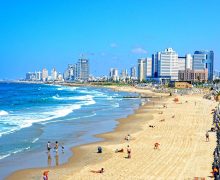
Students will have two-day weekends (Fridays and Saturdays) and one three-day weekend (Friday-Sunday) to explore the city or to travel around Israel. Cities such as Tel Aviv, Haifa, Nazareth and Bethlehem are all accessible by bus. Those who want to tour extensively should plan travel time before or after the program.
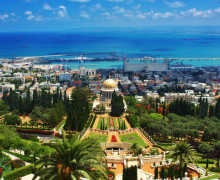
Students
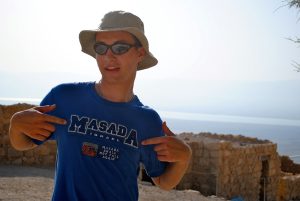
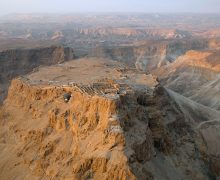
Students will visit the ruins of ancient Masada.
The program is open to English-speaking college students and recent graduates from any university. Over the past decade, participants in ieiMedia programs have included more than 800 students from 80 U.S. and Canadian campuses, along with students from Japan, Peru, Singapore, Thailand, Trinidad, Turkey and the United Kingdom.
Most of our students are journalism or communications majors, but those majoring in other subjects are welcome as well. For non-journalism or communication majors, experience working for a college or professional publication is helpful but not necessary.
The program is open to graduate students. We’d be happy to confer about supervising an independent project that would qualify for graduate credit at your school — or to offer this experience as a graduate internship.
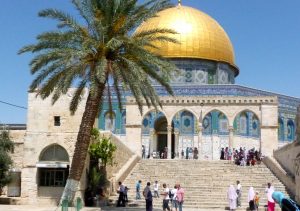
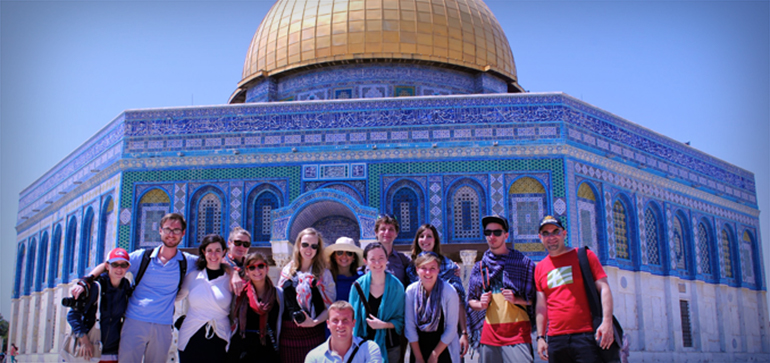
The Dome of the Rock, or Haram ash Sharif, is one of many holy shrines in Jerusalem.
Faculty
(Subject to enrollments/budget)
Current Faculty
PROGRAM DIRECTOR
Ilene Prusher is a journalism instructor at Florida Atlantic University, where she is also a faculty fellow in the Peace, Justice and Human Rights Initiative. She is an award-winning journalist and author who worked as a foreign correspondent for 20 years, covering Middle East, Asia and Africa. She served as a staff writer and bureau chief of the Christian Science Monitor from 2000-2010, and has also been a frequent contributor to TIME, The New York Times Book Review, The Guardian, Haaretz, The Jerusalem Report and other publications. She has taught at NYU-Tel Aviv, the Hebrew University, and IDC Herzliya and is the author of Baghdad Fixer, a novel about the war in Iraq.
INTERNATIONAL REPORTING FACULTY
Linda Gradstein teaches journalism at Hebrew University and NYU-Tel Aviv. She is also a freelance reporter for diverse outlets, including Voice of America, CBS Radio, Hadassah Magazine and the Jerusalem Report. For 20 years, she was the National Public Radio correspondent based in Jerusalem, and she won several awards for her coverage, including the Overseas Press Club Award.
Ricki Rosen is a news photographer and videographer who has worked professionally for more than 25 years. She was a contract photographer for Time magazine, and her work has been published in all major international publications including Newsweek, The New York Times Magazine, People, Paris Match and Figaro. Rosen, who lives in Jerusalem with her two children, also shoots and edits video documentaries.
Past Faculty
Nomi Morris is a lecturer in the writing program at UC Santa Barbara and director of UCSB’s Journalism Certificate program. She was based in Jerusalem and covered the region when she served Middle East Bureau Chief for Knight Ridder Newspapers (now McClatchy). Previously she had been TIME’s correspondent in Berlin and the Senior Writer for International at Maclean’s, Canada’s national news magazine. Since moving to California, Morris has written for Newsweek, the Los Angeles Times, the Los Angeles Review of Books and other magazines and literary journals.
Lisa A. Phillips is an associate professor of journalism and department chair at the State University of New York at New Paltz, where she teaches courses on literary journalism, feature writing, radio journalism and multimedia reporting. A former award-winning radio reporter, she has collaborated on multimedia reporting projects for The New York Times and other news outlets. She is also the author of two books: “Unrequited: Women and Romantic Obsession” and “Public Radio: Behind the Voices.”
View complete faculty biographies on our Jerusalem Faculty Page.
Equipment
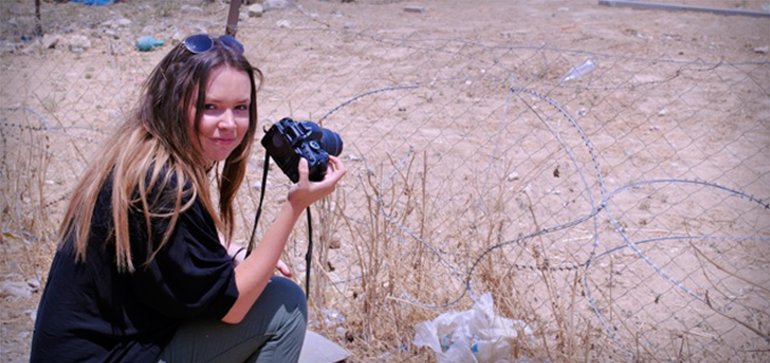
Students are expected to bring a laptop computer and digital camera, cell phone or other device that can record audio and video.
Interpreters
Most people in Israel speak at least some English. Interpreters will be available for students who want to interview Arabic or Hebrew speakers.
Application Deadline Details
Our priority application deadline for Summer 2024 programs is Friday, December 15th, 2023. Applications submitted after the priority deadline will be accepted on a rolling basis dependent on program capacity.
Submitting your application by the priority deadline means you will be accepted to a priority spot on the program of your choosing, as well as secure additional time to prepare for payment deadlines and scholarship and financial aid opportunities.
If you do not have the necessary access to submit your application by the priority deadline, please reach out to admissions@ieimedia.com to speak with an advisor.
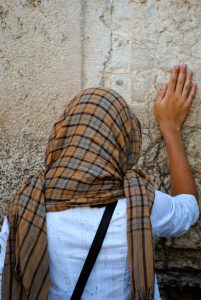
Jerusalem has holy sites for three major religions– Judaism, Christianity and Islam.
Previous Student Work
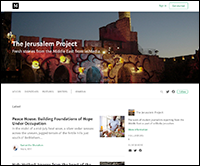 Check out the work created by students in the 2017 Jerusalem Project at http://medium.com/the-jerusalem-project.
Program Cost
The cost is $6,195 plus airfare. Includes: Tuition – 3 credits, housing, instruction, health insurance, farewell dinner and special programs, activities and cultural events. Graduates and students who do not need credit can deduct $450 from the program cost.
Application deadline: Priority Application Deadline is December 15, 2023. ROLLING ADMISSIONS UNTIL PROGRAM IS FULL. Applications received after the deadline can be accepted until program capacity limitations are reached.
TRAVEL ADVISORY: ieiMedia will be monitoring the situation with COVID-19 and will provide status updates to those who sign up for the program.
VACCINATIONS: Students must be vaccinated against COVID-19 to participate in the program.